NSSF CHANGES BEGINNING FEBRUARY 2026: WHAT EMPLOYEES AND EMPLOYERS NEED TO KNOW
Effective February 2026, new National Social Security Fund (NSSF) contribution changes will take effect as part of the phased implementation of the National Social Security Fund Act, 2013. The act mandates an increase in contribution rates over a 5-year period, effective from February 2023. These changes mark the fourth phase aimed at strengthening retirement savings.
Background to the NSSF Act, 2013
The NSSF Act, 2013 was enacted to improve the pension system by moving away from the flat-rate contribution model to an earnings-related system. The Act introduced a two-tier contribution structure, where both employees and employers contribute 6% each of pensionable earnings, making a total contribution of 12%. Implementation of the Act began in February 2023 and has been rolled out yearly to allow employers and employees to adjust.
Understanding the Two-Tier Contribution Structure
Under the NSSF Act:
– Tier I applies to pensionable earnings up to the Lower Earnings Limit.
– Tier II applies to pensionable earnings above the Lower Earnings Limit up to the Upper Earnings Limit.
Tier I contributions must be remitted to NSSF. Tier II contributions may either be remitted to NSSF or, subject to approval by the Retirement Benefits Authority (RBA), be redirected to an approved private pension scheme.
Key Changes Effective February 2026
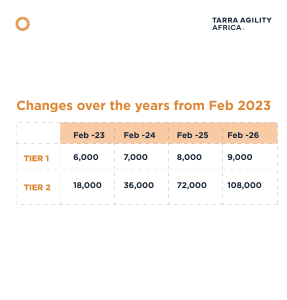
From February 2026, the pensionable earnings limits will increase as follows:
– The Lower Earnings Limit will increase to Ksh 9,000 from the current Ksh 8,000
– The Upper Earnings Limit will increase to Ksh 108,000 from the current Ksh 72,000.
Changes over the years from Feb 2023
Impact on Employee and Employer Contributions
Employees will continue contributing 6% of their pensionable earnings, with employers matching an equal amount. Employees earning Ksh 72,000 or more will experience an increase in NSSF deductions following the upward increase of the upper limit earnings to Ksh 108,000. As a result, the maximum employee contribution will increase from Ksh 4,320 to Ksh 6,480 per month, with employers contributing an equivalent amount. This brings the total monthly NSSF contribution to Ksh 12,960.
Effect on Take-Home Pay
With the increase in the NSSF rates, there will be a slight reduction on the net pay.
Employer Compliance Obligations
Employers are required to:
– Deduct employee contributions correctly.
– Match employee contributions.
– Remit total contributions to NSSF by the 9th day of the following month.
Failure to remit contributions on time attracts penalties and interest as provided under the NSSF Act.
Conclusion
The NSSF changes effective February 2026 represent a significant step toward improving retirement security. While the increased contributions may affect take-home pay and employer payroll costs, they are intended to enhance long-term financial stability for retirees.
Employers and employees are encouraged to review and update their payroll, seek professional advice where necessary, and plan adequately for the upcoming changes.
Written By:
Beatrice Njeri
Partner – Tax & Accounting
Eddah Nyameya
Tax & Accounting Associate